_edited.png)
Bringing Medication to Japan (2026): Essential Rules, Prohibited Drugs & Approval Process
- By Zen Gaijin

- Jan 4
- 7 min read
Updated: May 10

Bringing medication to Japan requires careful planning. Japan has strict rules and mistakes can lead to serious consequences. This guide explains exactly what you can bring, what’s prohibited, and when advance approval is required.
Japan's medication rules can seem confusing at first because they are based on active ingredients, not brand or generic names. The key is to work through the process calmly and methodically: identify what's in your medication, check it against Japan's official list, and --if required--apply for permission before you travel.
This guide reflects Japan's most current approach, which consolidates medication rules into a single Controlled Substances List. Official links are included throughout so you can always confirm the most current requirements with Japan's Ministry of Health, Labour, and Welfare (MHLW).
⚠️ Important: Do not try to get approval upon arrival. Customs officials do not grant on-the-spot exceptions.

One practical note before we begin: travelers arriving with medications, devices, and documentation often find Japan's airport-to-hotel luggage delivery services invaluable — handing off ordinary bags at the counter while keeping medical supplies close. Our insider guide to takuhaibin covers everything, including the same-day cutoff times most travelers miss.
Here We Go: Your Step-by-Step Guide (Updated for 2026)
Section 1. Find the Active Ingredients in Your Medication
Active ingredients are the specific substances in a medication that produce its medicinal effect. Put simply, they are the “working parts” of a medicine--and they are the basis for Japan's import rules.
Before doing anything else, identify the active ingredients in every medication you plan to bring, including over-the-counter (OTC) drugs.
How to find Active Ingredients?
In many countries (including the U.S., Australia, Canada, the U.K., and the EU) OTC medications list active ingredients on the packaging, often under "Drug Facts."
For prescription medications or OTC products that don't list ingredients, ask your pharmacist or doctor.
Section 2. Look up Each Active Ingredient on Japan's Controlled Substance List
Search for each Active Ingredient on the MHLW Controlled Substances List (hereafter, "the List"). Focus on the two columns on the right:
Category
Prohibited Substance
Each active ingredient will fall into one of three outcomes:
1️⃣ Prohibited
2️⃣ Controlled
3️⃣ Not listed
Each outcome has very different rules.
Note for GLP-1 users: Medications like Ozempic, Wegovy, and Mounjaro don’t always fit neatly into these categories and can require additional review. Before you travel, see our detailed guidance here.
Prohibited Active Ingredients
If the Prohibited Substance column is checked, the medication is not allowed in Japan under any circumstances.

➡️ Example:
Like many ADHD and allergy medications, Adderall contains the active ingredient amphetamine--a prohibited substance even with a prescription.

Japan has zero tolerance for prohibited substances. These include, among others:
Heroin
Opium, in all forms
Methamphetamine/amphetamine
Cannabis
Methaqualone
No permission is possible for Prohibited Substances. Leave those medications at home and consult with your doctor about alternatives.
🚫 Important note for recreational marijuana users: Cannabis is a prohibited substance in Japan. Possession or import—including edibles or vape products—is illegal, regardless of legality in your home country.
WHY ADVANCE APPROVAL MATTERS: Real World Example
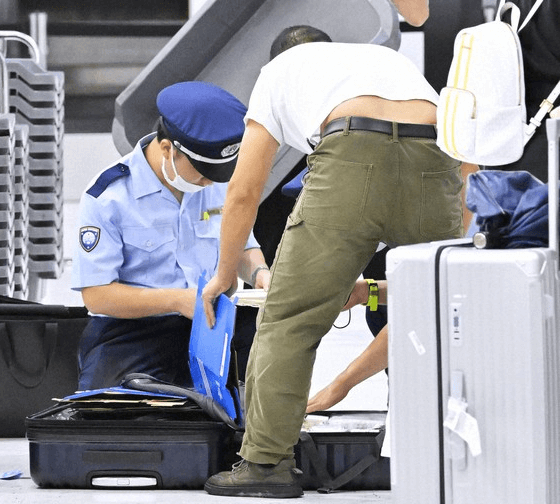
In 2019, an American woman was detained at Narita Airport after customs officials discovered she was carrying Vicodin, a prescription pain medication that requires special permission in Japan. Because no prior approval had been obtained, the case escalated beyond an administrative customs issue, and she was arrested and held in jail for 23 days (not at the airport) while the matter was resolved. Legal fees and penalties reportedly exceeded $600,000.
This case illustrates how strictly Japan enforces its medication import laws—even for commonly prescribed drugs.
Section 3. If the Active Ingredients Are Controlled
If the ingredient has a letter code in the Category column, it is a Controlled Substance. This means it may be brought into Japan, but only if you follow specific rules and, in many cases, obtain advance permission.
The MHLW Controlled Substances List uses letter codes to classify substances (active ingredients):
P = Psychotropic
SRM = Stimulants' Raw Material
N = Narcotic
C/ O = Cannabis / Opium (both prohibited)
If your active ingredient is on the List, note which letter code applies to your medication.
What If My Medication's Active Ingredient has a Letter Code P?
If your medication is marked with "P", you must take one additional step: consult Table 3 ("List of Psychotropics") to determine whether you need advance approval and how much medication you are allowed to bring.
Understanding Table 3 List of Psychotropics
For Psychotropics, Table 3 assigns specific quantity limits for each ingredient, stated in grams (g) or milligrams (mg):
Do You Need Permission for Your Psychotropic Medication?

No Permission Needed If...
The active ingredient is on Table 3
You carry an amount equal to or less than the listed quantity
The medication is not injectable

Permission Required If...
You are bringing more than the allowed amount on Table 3
The form is injectable
You need to bring medication for an extended stay
If you need to obtain permission for a Psychotropic medication, continue to Section 4, below, How to Apply for Import Permission.
What If My Medication's Active Ingredient Has A Letter Code SRM?
Substances listed as SRM fall under the "Stimulants Control Law" and all require advance permission to bring into Japan.
➡️ Example: Allegra-D is a common OTC allergy medication containing Pseudoephedrine, an SRM active ingredient. It requires advance approval to bring into Japan.
An important distinction: Regular Allegra (fexofenadine alone) does not contain pseudoephedrine and does not require advance approval within a one-month supply. It is only the -D formulation — which adds pseudoephedrine as a nasal decongestant — that triggers the SRM requirement. The same distinction applies to Claritin vs. Claritin-D, and Zyrtec vs. Zyrtec-D. When in doubt, check the active ingredients list on the packaging, not just the brand name.

To obtain permission for an SRM medication, like Pseudoephedrine, continue to Section 4, below, How to Apply for Import Permission.
What If My Medication's Active Ingredients has a Letter Code N?
If a medication's active ingredient is marked with an "N," it is classified as a narcotic. You must apply for an "import certificate" before you enter Japan.

Possession of narcotics without approval is illegal, even with a foreign prescription, and may result in arrest.
To obtain permission for a medication marked N, continue to Section 4, below, How to Apply for Import Permission.
What If My Medication is NOT on the List?
If your medications are not controlled or prohibited, you may bring them into Japan without applying for an import certificate, subject to quantity limits. Skip ahead to Section 5, below, Bringing Non-Restricted Medications.
Section 4. How to Apply for Permission: An "Import Certificate"
Start Early
Applications must be submitted at least 14 days before arrival. Start earlier if possible to allow time for questions or additional document requests.
Failure to obtain prior approval may result in denied entry.
Applying for Psychotropic "P" Medication
If you intend to carry psychotropics in an amount greater than indicated in Table 3 or if the medications are in injection form, you must submit a Medical Certificate from your prescribing doctor that includes:
Your name
Name of your disease
Necessity of medicine for your treatment
A list of your medicine, including dose and strength
Signature of the prescribing doctor
Date of issue of medical certificate
📧 Email your request to bring the medication, the amount you intend to bring, and the Medical Certificate to: yakkan@mhlw.go.jp.
Applying for "SRM" or "N" Medication
The application process for medications with these two designations is quite similar, so they are addressed together here.
There are 3 Steps:
Scroll down on the Application page to a heading: Required Documents for Application. Beneath that you will see the links to the Applications, which will allow you to save the document as a Word file:
Along with either application, you must submit:
A Medical certificate from the doctor who prescribed your medicine. It must include:
Your name
Your current address
Necessity of the medication for your treatment — the specific medical reason you take it. General statements such as “personal use,” “medical condition,” or “travel” are not acceptable.
A list of your medicines, including doses and strength
The signature of your prescribing doctor
The date of issue of medical certificate (issue date must be within3 months of travel)
Please note:
If the Medical Certificate is electronically signed, indicate that in your e-mail.

3. Photo of the medication packaging. Be sure that this is the same package (bottle or box) that you bring to Japan. Customs will examine the item and it needs to be the same as appeared in your application.
Where to Send Your Application and Documents?
Submit your application and supporting documentation (e.g., Medical Certificate, Medicine Packaging Photo) to the MHLW Regional Bureau that corresponds to your airport of arrival.
Section 5. Bringing Non-Restricted Medications
Once you’ve confirmed that your medication’s active ingredients are not listed as prohibited or controlled, you may bring them into Japan without applying for an "import certificate" — but within quantity limits.
➡️Example:
Loratadine (Claritin)
Loratadine is a common antihistamine used to treat hay fever and hives. It is not prohibited or controlled and is available OTC in Japan.

Quantity Limits
Even for non-restricted medications, Japan enforces quantity limits per MHLW guidelines:
Up to two months’ supply for topical agents (creams, patches, etc.)
Reasonable amounts of OTC supplements (vitamins or probiotics)
For quantities exceeding the limits, you still may need to apply for an "Import Certificate" and receive it before you leave home.
Special Case: Injectables and Insulin
You may bring up to a one-month supply of injectable medications (such as pre-filled insulin syringes) without an import permit.
However, empty syringes not connected to a prescribed medication, such as insulin, generally require an import certificate.
Diabetics should see the related Zen Gaijin post for detailed guidance.
Additional Resources
🔗 See Japan's Ministry of Health: Information for those who are bringing medicines for personal use into Japan
Already thinking through the details of your return trip? Our guide Your Second Trip to Japan: 13 Things Experienced Travelers Do Differently covers the questions that matter most once you've moved past the basics.
About This Guide. This post reflects our interpretation of Japan’s medication import rules based on official guidance from the Ministry of Health, Labour and Welfare (MHLW). Regulations may change, and individual circumstances can differ.
This content is provided for informational purposes only and does not constitute legal or medical advice.
© 2026 Zen Gaijin. This content is original research and may not be reproduced without permission.